When to Trim Oak Trees in Hays County
Trim oaks between July 1 and January 31, and leave them alone from February 1 through June 30. The Texas A&M Forest Service draws the line there because that's when oak wilt spreads most easily through fresh cuts, and every oak wound should be painted the same day no matter the month.
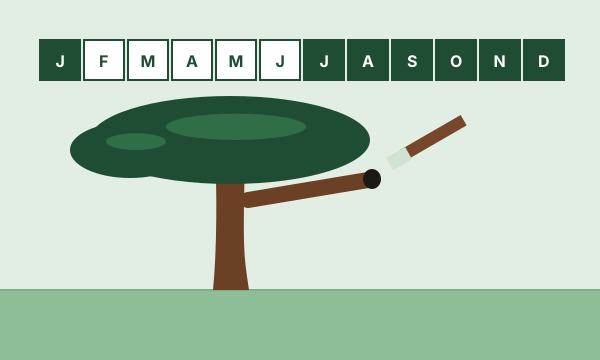
That's the short version. Here's why the calendar works the way it does, and how to plan around it.
Why Spring Is the Problem
Oak wilt is a fungal disease, caused by Bretziella fagacearum, that blocks the water-carrying tissue inside an oak. It moves to new trees in two ways.
The first is underground, through roots. Live oaks often grow in connected groups, and the fungus can travel through shared roots for years. Trimming has nothing to do with that kind of spread.
The second is by insect, and that's where pruning comes in. When a red oak dies of oak wilt, it can form fungal mats under its bark the following spring. The mats smell sweet and draw small sap-feeding beetles, called nitidulid beetles. The beetles pick up spores, then fly off looking for fresh sap. A newly cut oak limb leaks exactly what they want. If they land on it carrying spores, the tree can get infected.
Fungal mats and active beetles line up in late winter and spring. Hence February through June.
Month by Month
January. Good. Cold, dormant, beetles inactive. Many people book their oak work this month.
February through June. Don't do routine trimming. No canopy raising, no thinning, no "just a couple of branches." This is the window to schedule work for later.
July and August. Allowed, and generally low risk. It's hot, and it's hard on crews, but the beetle and mat activity has dropped off. Keep cuts small; heavy thinning in a Texas summer stresses the tree.
September and October. Fine. A popular window for clearance work before the holidays.
November and December. Good. Leaves on live oaks are still there, but the risk is low and the weather is easier.
Some local advice goes further and calls the coldest stretch of winter the best time of all. That's reasonable if your schedule allows it. What matters most is staying out of the spring window.
Paint Every Cut, Every Time
Painting oak wounds used to be optional advice for most trees. For oaks in Central Texas, it isn't. A light coat of latex paint or commercial wound dressing right after the cut covers the sap so beetles aren't drawn to it. It takes seconds. Watch for it if a crew is working on your oaks, and ask if you don't see it.
This applies to any wound, not just pruning cuts: a lawn mower scraping a root flare, a string trimmer nicking bark, a branch torn by a truck.
When a Limb Breaks in April
Storms don't follow the calendar. If wind snaps a big live oak limb over your driveway in April, you don't wait until July. The broken limb gets cut back cleanly to a proper point and the wound gets painted right away. The "no trimming" rule is about routine work you could plan, not about damage that's already happened.
Same for a limb that's cracked and hanging over a house. A torn, jagged wound left open for months is worse than a clean cut painted on the spot.
Which Oaks This Applies To
All of them, with different stakes:
- Texas red oak and Spanish oak are the most vulnerable. They often die within weeks once infected, and they're the ones that grow the spore mats.
- Live oaks are the trees most often lost to oak wilt in Central Texas, mostly through root spread between neighboring trees.
- Post oaks and other white oaks are the least susceptible but still get the same calendar and paint.
If you're not sure what kind of oak you have, treat it as an oak.
Planning Around the Window
A few practical habits help:
- Book early. The safe months fill up, especially fall. Call in late spring for summer or fall work.
- Do clearance work before February. If the city's sidewalk and street clearance rule or a roof problem needs fixing, get it done in winter rather than waiting into spring.
- Clean tools between trees. Crews working a dead or suspect oak should clean saws before moving to a healthy one.
- Don't move firewood. Unseasoned wood from a red oak that died of oak wilt can carry the fungus. Buy or burn local, seasoned wood.
What If You Already Trimmed in Spring?
Paint the cuts now if they're still fresh. Then watch the tree. With live oaks, look for leaves with yellow veins turning brown over the next season. With red oaks, watch for a fast browning of the whole crown. Most spring cuts don't lead to infection, but the odds aren't worth taking on purpose. What oak wilt looks like versus normal leaf drop
Getting It Done
The oak trimming page covers how oak work gets done safely, from cut placement to handling dead red oaks. For other trees in the yard, like cedar elms, pecans and hackberries, timing is more flexible; see tree trimming.