Live Oak Dropping Leaves in Spring: Normal or Oak Wilt?
In March and April, a live oak dropping piles of leaves is almost always doing exactly what live oaks do. They hold their old leaves through winter, then shed them as new leaves push out in spring, so for a few weeks the yard fills with leaves while the tree looks thin.
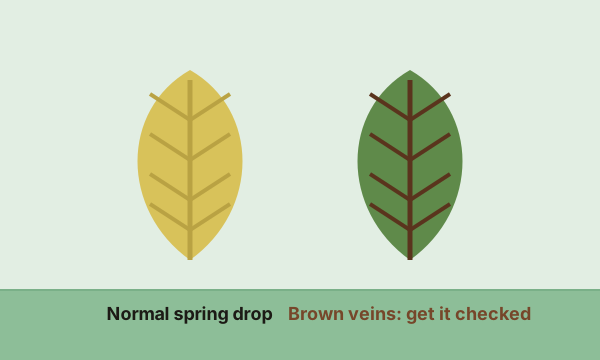
Oak wilt looks different, and the clues are in the leaves themselves and the timing.
What Normal Spring Shedding Looks Like
- It happens in late winter and early spring, often over two or three weeks.
- Old leaves turn yellow or brown evenly, then fall.
- New, light green leaves and catkins (the stringy flowers) appear at the same time.
- Every live oak in the neighborhood is doing the same thing.
- By late spring, the canopy is full and green again.
If that's your tree, rake and relax.
What Oak Wilt Looks Like in a Live Oak
Leaf veins. The classic sign is veinal necrosis: leaves with yellow veins that turn brown while the tissue between them stays green for a while. It's distinctive once you've seen it. Pick up a few fallen leaves and look closely.
Timing. Leaf loss in summer, or in fall, when live oaks should be holding a full canopy.
Pattern. Thinning that starts in one part of the crown and spreads. Over a year or more, nearby live oaks start doing the same thing, and you get a slowly widening group of dying trees.
Speed. Months, not days. Some live oaks die within a season; others hang on for years with thin crowns.
What Oak Wilt Looks Like in a Red Oak
Texas red oaks and Spanish oaks are a different story. When they're infected, the whole crown often turns brown or reddish in a matter of weeks, usually in late spring or summer. Leaves may stay on the tree for a while after they die. A red oak that was fine in May and brown in June is a red flag in more ways than one.
Dead red oaks matter beyond your yard. Under their bark, they can grow fungal mats that feed the beetles that spread the disease to fresh cuts on other oaks.
Other Things That Get Mistaken for Oak Wilt
- Drought stress. After a long dry summer, leaves brown at the edges and drop early across the whole tree, often on many species, not just oaks.
- Construction damage. Trenching, grade changes or heavy equipment over the roots in the last few years can cause slow decline on the damaged side.
- Leaf spots and galls. Small spots or bumps on leaves are mostly cosmetic.
- Cold damage. A hard freeze can brown leaves all at once in winter; they're usually replaced in spring.
None of these produce the yellow-veined leaves typical of oak wilt in live oaks.
If You Think It's Oak Wilt
- Don't trim or wound the tree while you sort it out, especially from February through June. Why the calendar matters
- Collect a few leaves that show the symptoms, and take photos of the whole crown.
- Get it confirmed. The Texas A&M Forest Service helps landowners identify oak wilt. Its Find My Forester tool shows the contact for your county. Most of San Marcos is in Hays County.
- Deal with dead red oaks correctly. The Forest Service advises that recently dead red oaks suspected of oak wilt be destroyed by burning, burying or chipping, and not kept as firewood.
- Ask about containment. For live oaks, the main tool is a trench cut deep enough to sever root connections around the infection. Removing diseased red oaks is the other standard step. The Texas Oak Wilt Suppression Program offers cost-share to qualifying landowners working with Forest Service staff.
Can a Live Oak With Oak Wilt Be Saved?
There's no cure. Some live oaks, particularly ones not yet badly affected, are injected with fungicide to help protect them, and some survive with partial crowns. Those decisions depend on the tree, how far the disease has gone, and whether a trench is protecting neighboring trees. Expect a frank answer rather than a hopeful one.
When to Call a Tree Crew
- A red oak died fast and needs to come down and be chipped
- A dead or dying live oak is near the house, the drive or a play area
- Healthy oaks need trimming in the safe months
- You need a dead tree cleared after a diagnosis