A Tree Fell on My House: What to Do in the First Hour
Get everyone out of the damaged part of the house, stay away from any downed wires, and check for gas. Then take photos, call your insurance company, and line up a tree crew to get the weight off the house. Don't climb onto the roof or start cutting yourself.
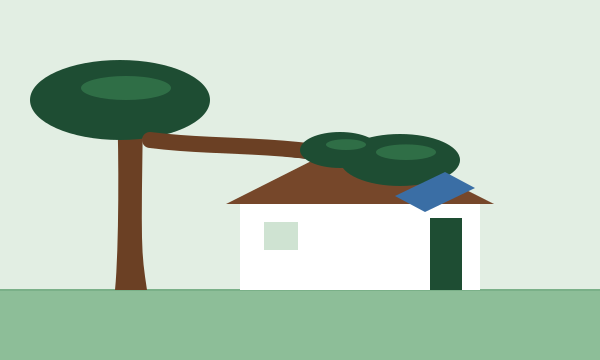
Central Texas storms come fast. When a severe storm hit San Marcos on May 9, 2024, big branches came down on homes, lawns and cars all over town. Here's the order to work through if it happens to you.
Minute One: People
- Get out of the rooms under the tree. A limb resting on a roof can shift and come through, especially if more wind is coming.
- Account for everyone, including pets.
- If anyone is hurt, call 911.
Next: Power and Gas
Look for wires. If the tree took down the service line to your house or a line on the street, stay well back (utilities commonly advise at least 35 feet) and keep others back. Treat every downed wire as live. Call your electric provider; the name is on your bill. San Marcos Electric Utility serves much of the city, and homes outside city limits may be on an electric cooperative. Call 911 if a line is down near people or sparking.
Check for gas. If the tree hit the gas meter or you smell gas, get everyone out, don't flip switches, and call 911 and the gas company from a safe distance.
Shut off power inside if water is coming in and you can reach the breaker panel safely and dry.
Then: Photos
Before anything gets moved, document it:
- Wide shots of the tree on the house from several sides
- Close-ups of roof damage, broken windows, gutters, siding, fences and vehicles
- Inside damage: ceilings, water, broken items
- The base of the tree and the stump or root area, especially if it was a neighbor's tree or showed decay
Photos protect your claim and help answer the question of whether the tree was healthy or already failing, which can matter for who pays. Neighbor tree questions
Call Your Insurance Company
Call your homeowner's insurer as soon as you can. Ask:
- Whether they want an adjuster to see the tree in place before it's removed
- What they cover for tree removal from the house
- Whether to save receipts for tarping, emergency repairs and lodging
Most policies expect you to take reasonable steps to prevent more damage, like tarping and getting the weight off, so don't hold off on those just to wait for an adjuster. If an insurance dispute comes up later, the Texas Department of Insurance can help consumers with home claims.
Getting the Tree Off
A tree on a house is a rigging job. Cutting from the wrong side can drop the weight through the roof or roll it across. A crew will usually tie off the tree or limbs, take the weight off in sections, and lift or lower each piece clear. Then the roof can be tarped until a roofer can make repairs.
Call (877) 674-2213 during phone hours: Monday through Friday 7am – 10pm EST (6am – 9pm Central), Saturday 8am – 10pm EST (7am – 9pm Central), and Sunday 7am – 9pm EST (6am – 8pm Central). Calls outside those hours may not be answered. Describe what the tree is on, whether lines are involved, and how a truck can get to it. Storm and fallen tree removal
While You Wait
- Cover openings from inside if you can do so safely: plastic or towels under leaks, buckets under drips.
- Move valuables out of rooms where water is coming in.
- Don't climb on the roof while the tree is there.
- Keep people out of the yard under hanging limbs.
- Watch the weather. If more storms are coming, stay out of rooms under the tree.
If a Tree Fell on Your Car
Car damage from a falling tree is usually covered under the part of an auto policy that handles non-collision damage, if you carry it. Same steps: photos first, then call your insurer, then have the tree removed.
Afterward
Once the immediate danger is gone, look at the other trees near the house. A storm that drops one tree often cracks others. Trees with fresh splits, hanging limbs, or newly heaved soil on one side of the trunk need attention before the next storm.